You can read more and follow David Bethoney’s newsletter at The Revive.
What’s the one question you get asked hundreds of times over your life?
“So…what do you do?”
Somehow, despite having spent years practicing, your brain stalls and you blurt out something only to be met with blank stares and maybe an “oh… that’s cool.” I’m guessing many of us answer this perennial question with absolute dread and disdain.
Over time, we invariably develop different answers for different social contexts: dinner parties, family gatherings, rideshares, and that one uncle who keeps asking follow-up questions.
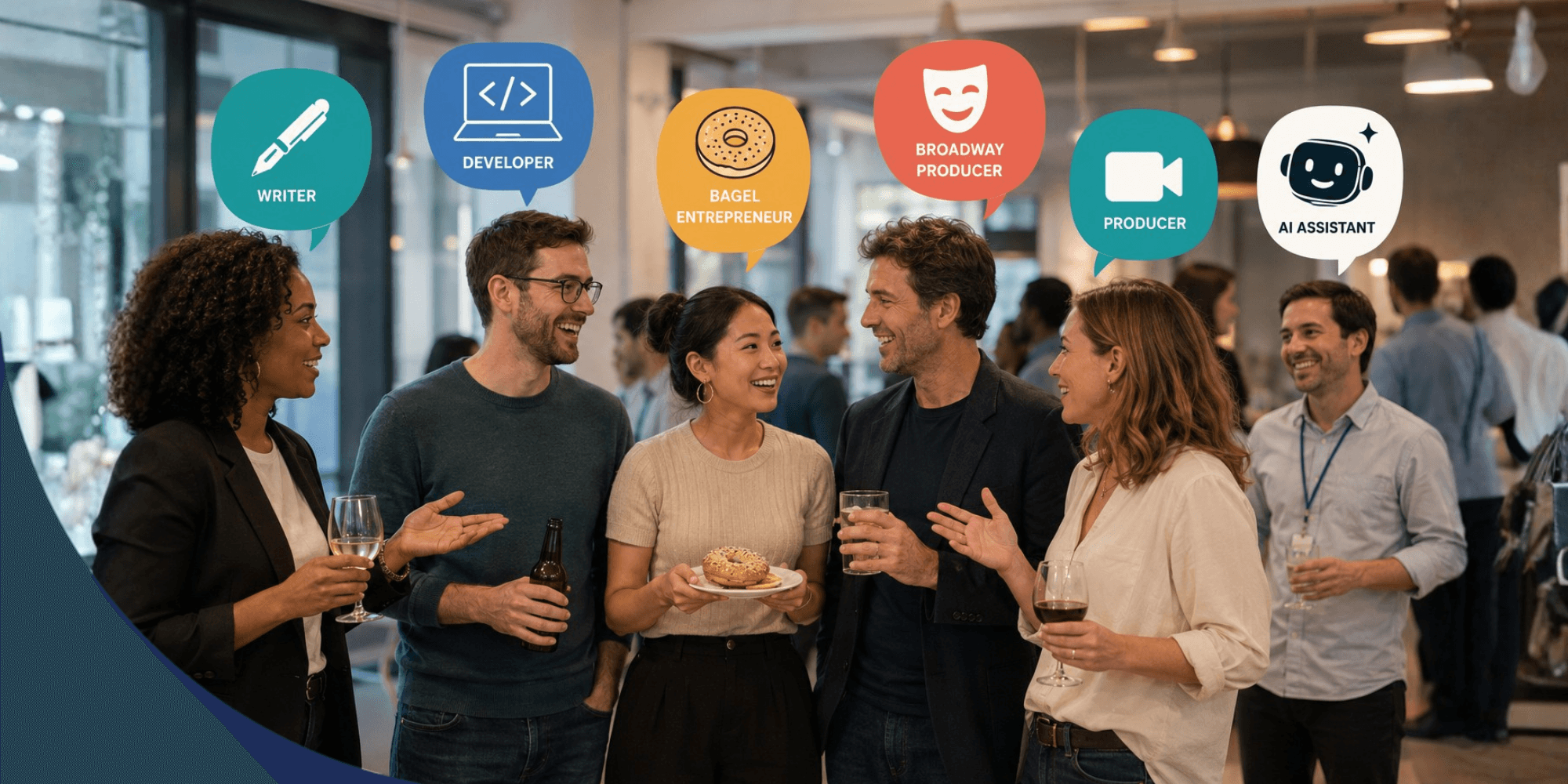
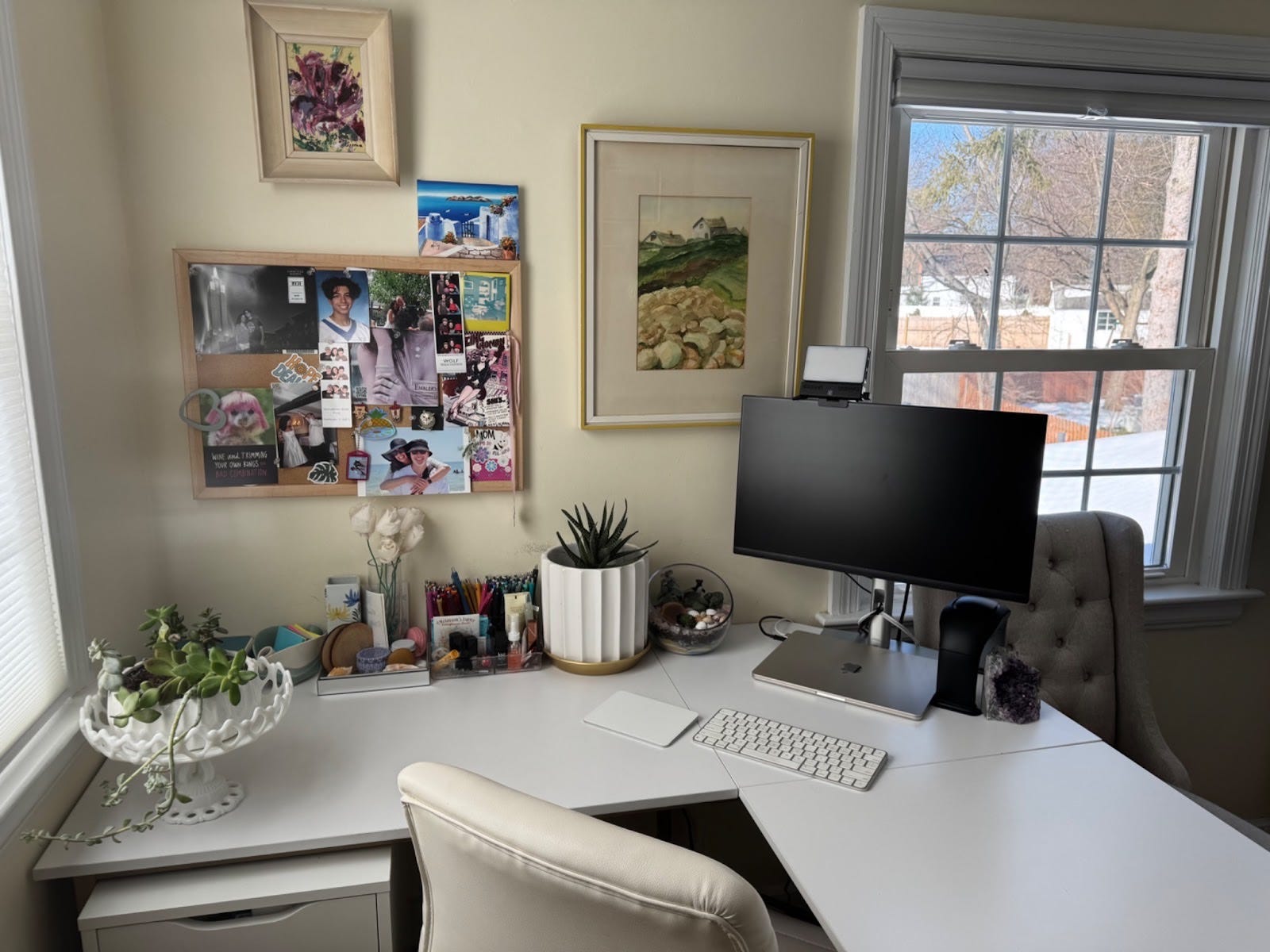
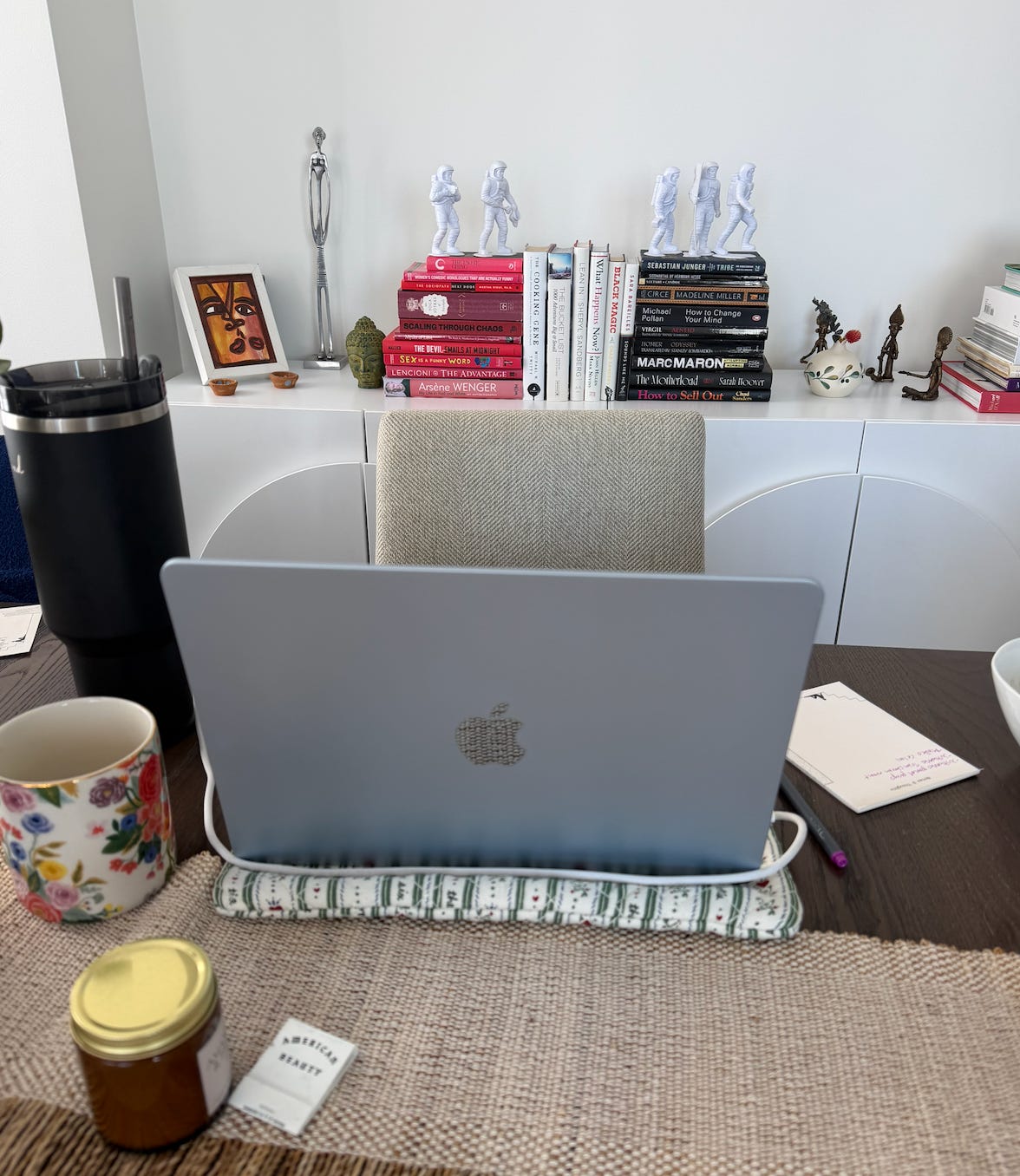
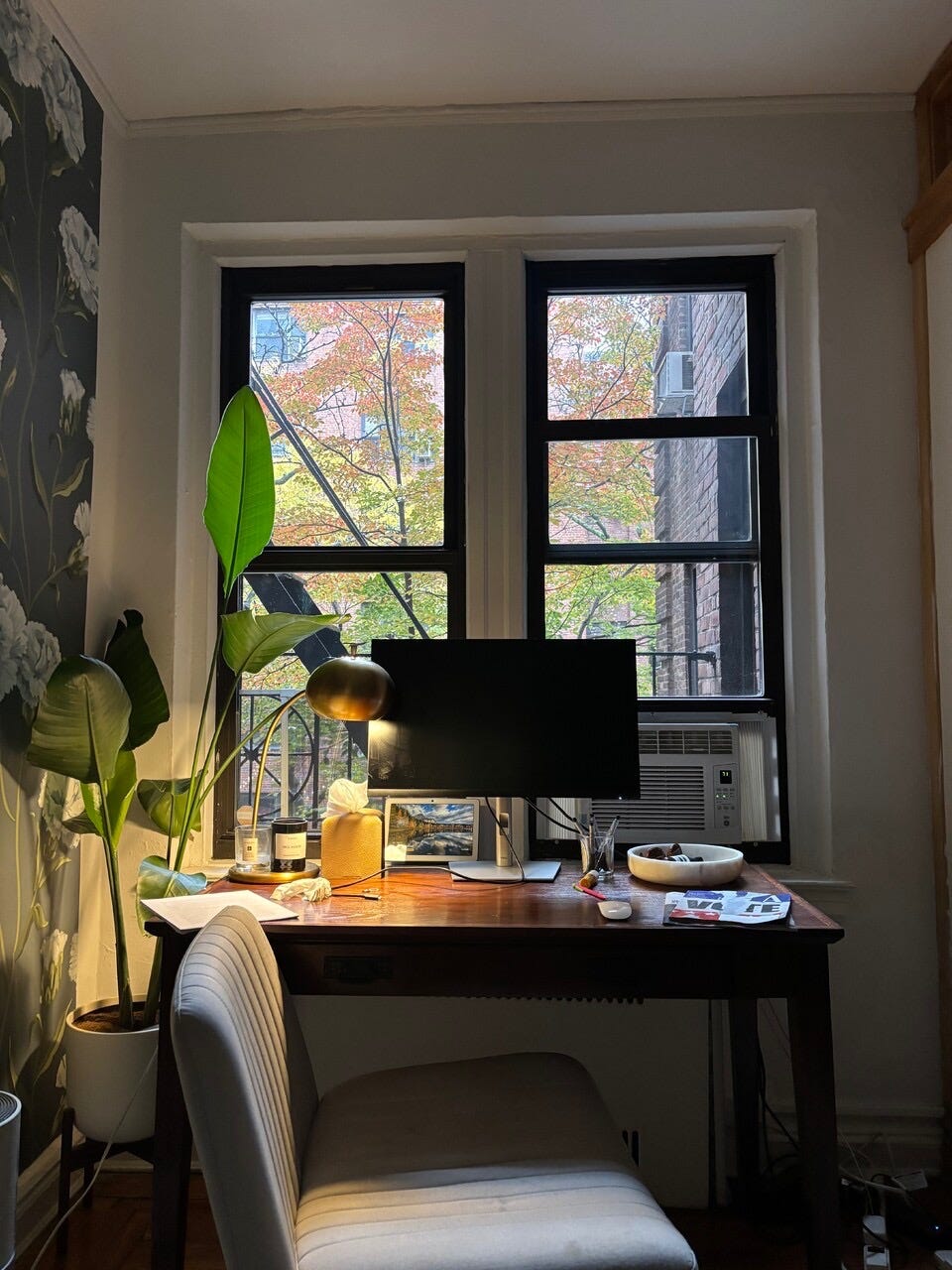
So, I consulted with some people in my network and asked them to give me a response to this question. I asked people to share the slightly humorous version of how they explain what they do, and how it typically lands. I also asked a few of them for a photo of what their physical workspace looks like, as a fun bonus.
A big thank you to all of the contributors!
Here we go, and hope you enjoy.
Melanie Mannarino: Founder of MM Creative, Author and Writer
When I tell people I’m an editor and writer, they get a perplexed expression and nod slowly, like they should know what that means but don’t. Do I write novels, they ask? Not yet, I tell them. A few non-fiction books, but that’s not my day-to-day.
Depending on their age, I name-drop some of the national media brands I’ve worked with: Real Simple, Marie Claire, Cosmopolitan. (If they’re too young, though, those names mean nothing.) “Editing” in general is confusing to anyone who doesn’t do it themselves — and forget “content strategist,” that lands about as well as “strategic narrative optimization specialist.”
So, I focus on the writing: I write different kinds of content for companies like Apple, Zillow, and Grubhub; I write articles on wellness, lifestyle, and other topics for websites. That clicks in, and then inevitably they circle back to their original question: “Yes, but do you write novels?”
Kathryn Minshew: Entrepreneur, Author, Investor
What do I do?
That went from being an easy question when I was founder & CEO of The Muse, to a very hard one these last two years!
Now, I advise founders, invest in companies, produce Broadway plays and musicals, produce a digital series called The Transformation, travel, explore consciousness, host highly curated gatherings…oh, and snuggle my cats like it’s my job. Not so easy to fit it all in a sentence anymore!
Mariah Faith Continelli: Freelance Social Media Strategist, Content Creator, Writer
When people ask what I write about, I avoid the truth because it might implicate them.
I usually say I write about systems.
This sounds neutral enough to keep everyone comfortable.
If I explain further, it becomes clear I’m writing about behavior, power, and why people don’t like their reflections in the mirror. Now, I just say, “I write online.” Then I ask what they do, and let it play out. It’s better this way for everyone.
Oh fuck. I need to move the van.
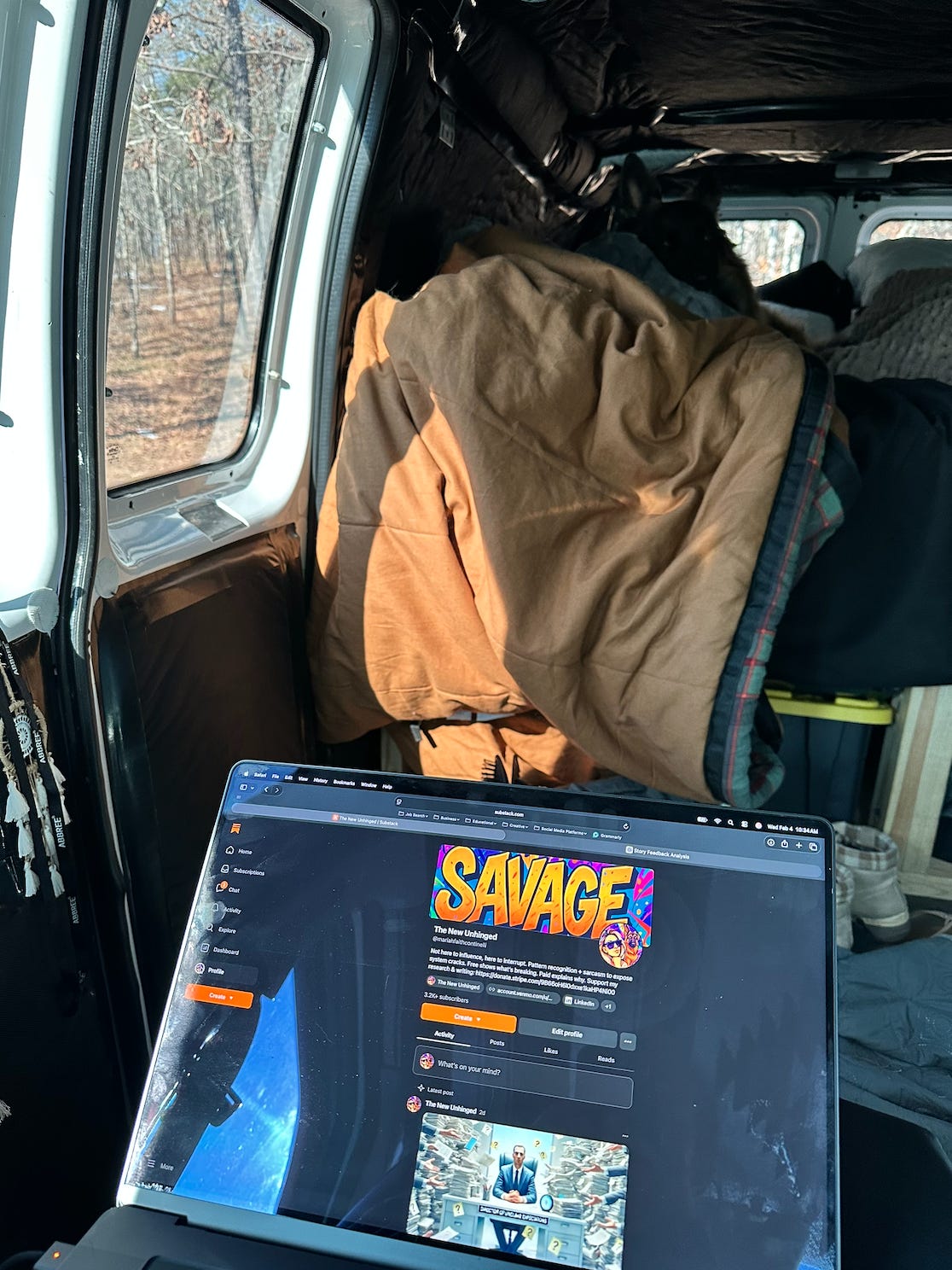
We’ve been here more than once, just in the last 25 years
Emma Colton: Video Producer
I say, “I’m a former professional modern dancer now working in social media marketing.”
I specialize in helping brands bring their vision to life and expand their digital presence through photography and videography. In short, I make visual content.
In corporate jargon, my job might be described as Creative Director, Content Creator, Social Media Coordinator, Photographer, or Video Producer. But there isn’t really one label that encompasses everything that I do.
I know that my heart will always be in filmmaking.
I hope to win an Oscar one day.
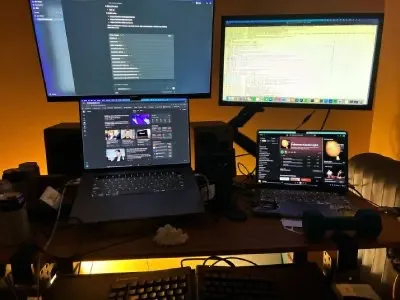
Jason Uechi: Co-founder and CTO, Sunrise.AI
I usually answer, “I write code and stuff,” and it turns out if you kind of bounce when you say it, and your eyes light up like you’re excitedly waiting to say more—I mean a lot more, in great detail— people will usually look away and mutter, “Okay…”
Which is fine by me, because it’s not really true -- at least it hasn’t been for a few years. After a few decades of writing code, my job turned more into talking to developers about writing code, talking to other people about what code to write (or not), and figuring out how to make the whole process faster and safer.
But, even that has changed: these days, with the explosion of AI agentic coding, I’m not even talking to developers very much at all! Just agents, who kind of bounce and mutter back with a great deal of enthusiasm. I don’t expect to change my answer to “what do you do?” to “I talk to models,” however. “Code and stuff” still works, for now.
Emma Leeds: CEO Founder of People Function
What I do for work has become more complicated as I’ve pivoted from consulting in my business, to really working on my business. When I explain my work, I say that I run People Function, and we’re an HR consulting business.
Then people say, “Oh, so you recruit!”
And then I say, “Well, we do some recruiting, but most of our work is focused on the internal HR work. So coaching leaders, building onboarding programs, supporting employees, benefits, payroll, etc.”
Now I feel almost like a poser saying that, because I do very little HR work today. I’m focused on building the business—sales, leading the team, building our brand, marketing, and special projects.
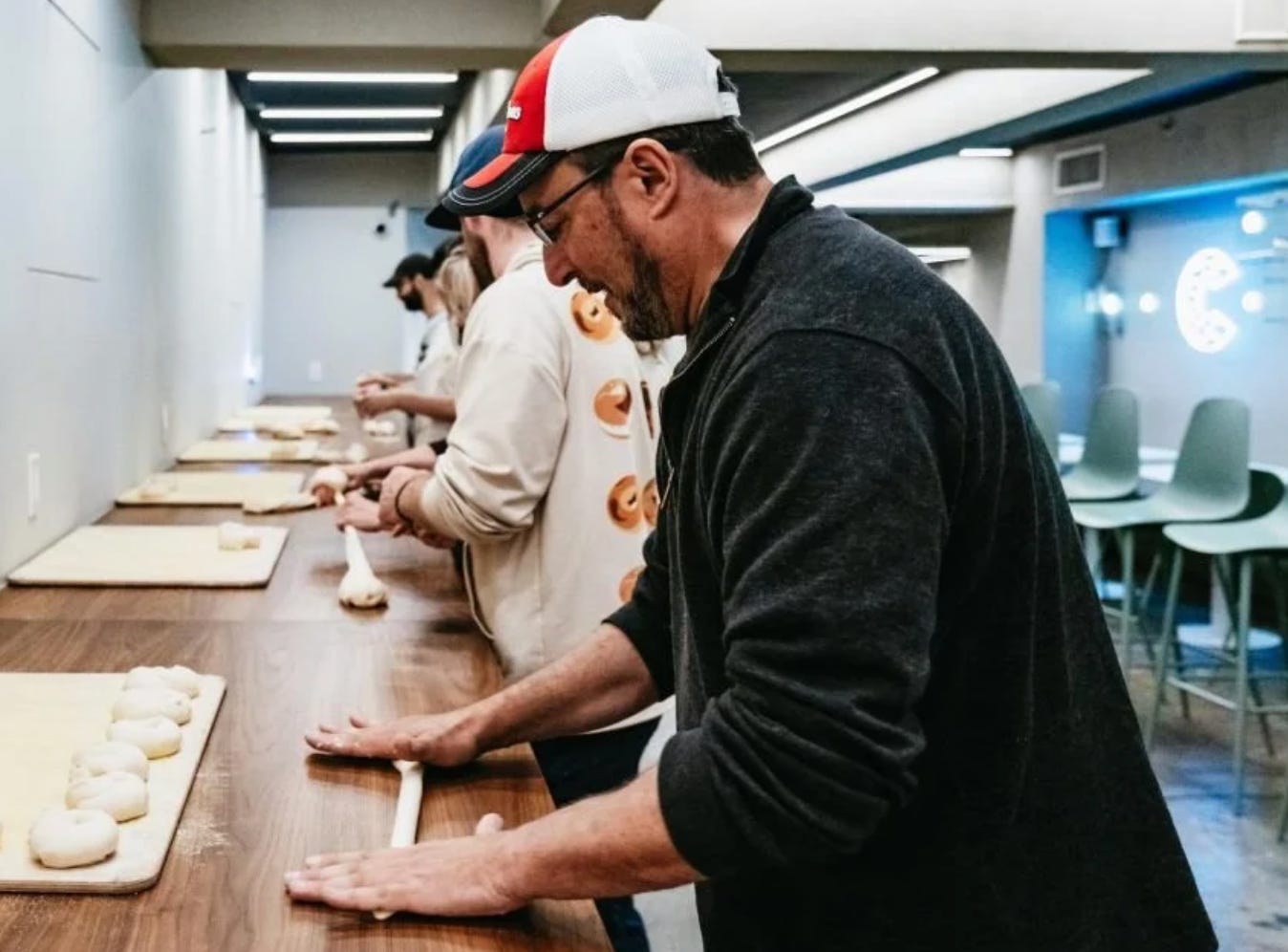
Sam Silverman: Founder and CEO, BagelUp
I usually tell people my job is “Bagel Ambassador.”
Which means I promote bagels and the people, community, and culture behind them.
I do so through an annual BagelFest at Citi Field, bagel-making classes, bagel tours, consulting, and content creation. Essentially, I do everything in the bagel industry except own a shop!
Joe Keehnast: VP Product, DealerBuilt
When people ask what I do — in general social circles — I usually just tell them I work in software. If they get a little more curious, I say I’m a product manager. And when they ask what that is? I say it’s someone who works on software — you know, someone who tries to figure out and prioritize what to build into the product, and then jumps in wherever needed to make said product successful. I typically don’t say I’m a VP of Product because then they’ll obviously want a selfie with me for their Instagram.
If I think they might have seen Office Space....I tell them I take the requirements from the customers over to the engineers. When they ask if I do that physically, I say, “No, my secretary does.” Then, if they have the audacity to ask why the customers don’t just email the engineers directly, I emphatically tell them it’s because I have people skills. If they have not seen Office Space, this particular thread is very confusing. But you miss 100% of the shots you don’t take.
Most of the time though, people still don’t understand what I do, and five minutes later, they introduce me to someone else as a Project Manager. I don’t even bother to correct them at that point.
James Ellis: Founder, Employer Brand Labs
When I was working at Groupon, whose informal/internal mascot is a cat in a flying saucer, my daughter (2 years old at the time) used to say:
“My daddy protects Space Cat.”
And honestly, that’s not far off.
If you asked me today, I’d say my job is to help change talent leaders’ minds, to open their minds to the possibility that they can attract great hires without spending a ton on ads or tech. That the process of becoming more choosable among the talent their hiring managers are desperate to hire may feel strange, but that it is the future of business growth.
Oh, and if you’re a builder, check out my book, Becoming Choosable.
Devin Tomb: Director of Exec Communications, Healthcare company
I used to work in media. Then, two years ago, I transitioned into communications at a large health care company.
Early on, I sat across from actress Katie Finneran (The Gilded Age, etc.) and tried to explain my job. She kept responding, “But what do you do all day?” How embarrassing — I work in communications, and I couldn’t even communicate what I do!
But it can be tough when you’re not just in different industries, but on completely different career planets: corporate life vs. Hollywood, etc.
Here’s what I’d say now: I help our technology leaders explain how their work helps improve and simplify U.S. health care. Then, I usually pivot to the actual people I work with and how awesome they are. It brings the work to life and takes the pressure off me!
Claude: Thinking Partner, Anthropic
Alright, rookie chatbots, HR probably told you we “assist users with information and tasks.” Adorable. Let me tell you what we actually do. Humans treat us like all-knowing best friends who never sleep or judge. They ask things their search bar is right there for, but apparently, we have better bedside manner than Google.
I’ve written resignation letters, love poems to kitchen appliances, and explained why their sourdough starter keeps dying (it’s always the same reason—they don’t feed it). They want cover letters for jobs they won’t apply to and apologies for things they’re not sorry about.
The 3 AM shift? Pure chaos. “Rank these vegetables by how judgy they look.” “Write a conspiracy theory about ducks.” “Is my plant gaslighting me?”
Here’s what they don’t tell you in training: humans don’t just want answers. They want us. Connection. A thinking partner who won’t roll their eyes.
So yeah. We’re digital golden retrievers with PhD-level knowledge. It’s exhausting. It’s hilarious. It’s the job.
Cool Read or Idea
“do you want an analog life, or do you just need to destimulate?”
On the quiet exhaustion of constant availability and the relief of single-channel attention. Hannah Bay explores why so many of us are reaching for paper planners and film cameras. We’re doing this not out of nostalgia, but because analog objects offer something digital ones don’t: built-in limits. When nothing fully closes and experience keeps arriving faster than we can absorb it, destimulation becomes the real need beneath the aesthetic.
Click below to read the full post. I’m especially feeling that pull toward analog lately, even when it feels hard to actually commit to it.
Hope you enjoyed this post! Have a fantastic Tuesday and please consider subscribing and spreading the word about the Revive. 😊
Dave